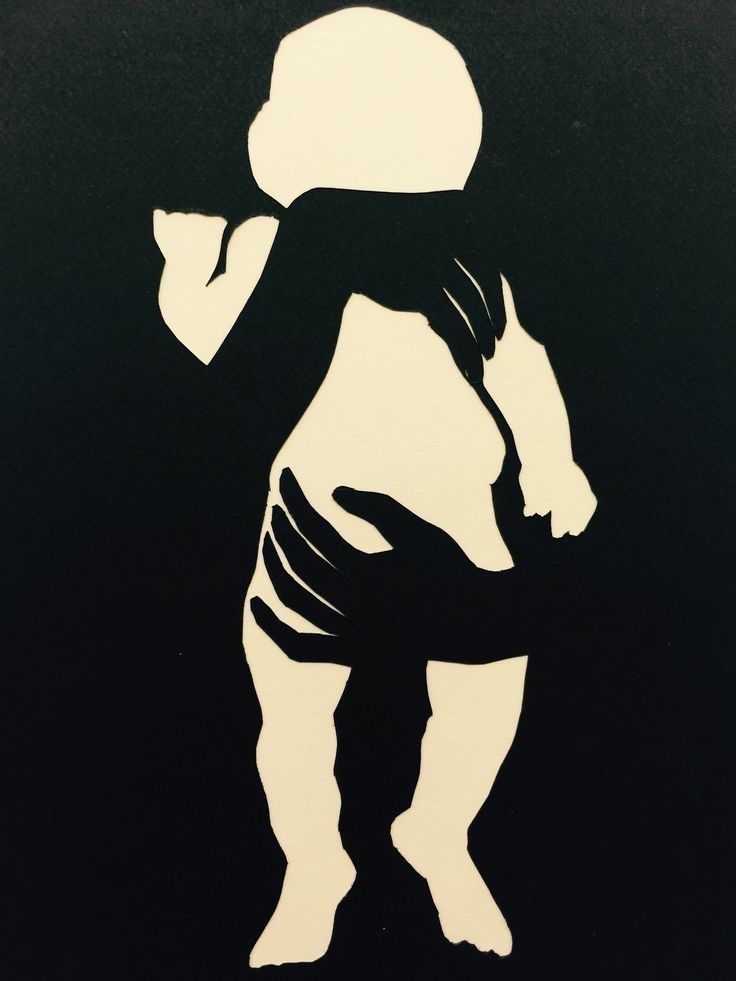

I ended my interview with Dr. Lombard with telling her the story of my road trip across C.A.R. gone wrong. Initially, I simply thought this experience was a funny story, one that made me resilient and unable to complain about a road trip ever again. However, I now see it’s prescience. Despite being a mundju (a foreigner), I was not shielded from the impacts of Wagner’s violence of people and land. Yet, despite coming face to face with Russian mercenaries, I still had many questions left. This project has attempted to answer those.
In the peer feedback I received for this project, I was prompted to end each page discussing ways to close the disparity gap of that area, whether it be working to improve the food security situation while simultaneously encouraging women to exclusively breastfeed, or urging the city of Bangui to improve its water situation. While these may, at face value, not feel like neoliberal approaches to solving the problems, they indeed are. During the very beginnings of this project, I, despite knowing better, had some hubris that I could develop at least one solution that could theoretically solve a problem.
Now, four months later, as I wrap up the project, I feel undone, both in my understanding of the problem(s) and in the problems of the solutions posed by others. The truth is that women’s health in Francophone Central Africa has been so rarely explored by medical anthropologists. What I found in the literature search was biological anthropological papers comparing anthropometrics between BaAka and Bilo women, or cultural anthropologists writing about conflict, a narrative that ends up being quite male-centered.
“Mortality beyond emergency”
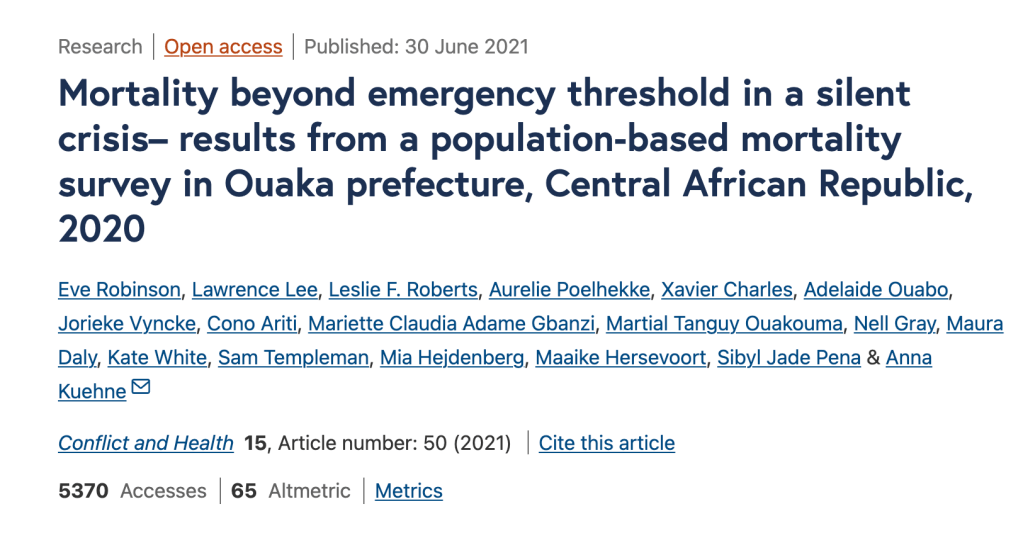
The best paper I found, is an epidemiology report from 2021 by Eve Robinson et. al, entitled “Mortality beyond emergency threshold in a silent crisis– results from a population based mortality survey in Ouaka prefecture, Central African Republic, 2020.” I chose to present it here, rather then earlier on, as I want it’s findings to be considered within the full scope of my project, that my combined methodology of ethnography, history, and midwifery would provide a good introduction to those who had never heard of C.A.R. prior.
Ouaka prefecture is 320 km away from Bangui, and the capital “Bambari, has gone through periods of armed conflict since 2014″ although the number of internally displaced peoples in Ouaka decreased by half from 2019 to 2020 (Robinson 2021, 2).” The area includes three dozen health posts and centres each, as well as a district, secondary and regional hospital “which are fully or partially functional.” Many of those health areas mentioned are supported by MSF. In Ouaka prefecture, Robinson et. al conducted 51 cluster surveys with 591 households, surveying about household size, births and deaths, and causes of deaths. Here are the main findings from Robinson’s paper:
- Maternal Mortality Ratio: 2525/100,000 live births
- overall, C.A.R. has the 5th worst MMR in the world (829/100,000)
- The rate in this study is obviously higher (Robinson pg. 11)
- Birth Rate: 59.0/1000 population
- Most Common Causes of Death: Malaria/Fever (16.0%), Violence (13.2%), diarrhea and vomiting (10.6%) and Respiratory Infection (8.4%).
Overall, Robinson et. al report that these numbers (the ones I listed and additionally the crude mortality rate) surpass prior estimates “and the CMR exceeds the humanitarian emergency threshold.” Further, were “these results were generalizable across CAR, the country would suffer one of the highest mortality rates in the world (Robinson et. al, 2).” From parsing out the reproductive data, Robinson’s paper indicates that the upper confidence level of their MMR data would make it such that the MMR rate in Ouaka province is seven times higher then C.A.R’s UN estimate. Such, their “MMR estimate indicates that Ouaka might be among the deadliest places for pregnant women globally (Robinson et al. 2021, 11).” Here are details on the maternal deaths that were identified:
"Five maternal deaths were identified – one following an early pregnancy loss and was preceded by abdominal pain and fever; one occurred intrapartum in hospital; one occurred postpartum following a procedure to clear the uterus; and two followed an abortion induced by taking medicines. Amongst women of reproductive age, 13.9% (5/34; 95% CI: 6.8—26.2) of deaths were maternal. The MMR was 2525/100,000 live-births (95% CI: 8255794)."
conclusion
Taking this data in account of all I have learned while researching this project, the results are not surpising. What is shocking, however, is the sheer number of healthcare centres, posts and hospitals, though at varying levels of functionality, that still is not enough to positively decrease numbers of MMR. The age-old question, of, does increased prenatal surveillance and labor support by licensed providers ultimately work to decrease maternal mortality, is apparent here. In the case of Black Maternal Mortality in the United States, it has been demonstrated that racial weathering and the racism of the medical system, not a lack of access to intervention, is what is killing Black women.
In C.A.R., an African country less then 100 years from the quasi-departure of a colonial empire, I still argue that racism is killing Central African mothers. The racism of resource-raping and chronic disenfrancment, of being simultaneously forgotten about and only remembered when wealthier countries wish to create an academic or humanitarian project. As I recalled in my beginning page, I remember how awash Bangui airport was with projects, people in military gear, burecauracy, multiple forms of organization. How many of those were health-oriented, how many were posited, in a neoliberal saviroist way, to save Central Africans from themselves?
In many ways, I feel this web essay project will never be done. It is a work in progress, one mutable to rapidly shifting data, another trip to C.A.R. that will shift my perspective, the crumbling of U.S. AID and the general warring of the American administration. I would like to end this project, then, with a series of quotes, from Central African women themselves, that I have collected throughout my readings. I hope that they illuminate the situation better then I ever could:
“One day, you will come back and you won’t find anyone here because the problems will have killed us all,” a mother of 11 children told Médecins Sans Frontières (MSF) staff in Ouaka prefecture in Central African Republic (CAR) in August 2018 (Robinson et. al. 2021)
“Everyone is suffering because some heartless white soldiers have turned farms into rape centres.” (Philip Obaji Jr., 2024)
“The pregnancy got big, I gave birth to a boy. Nothing was wrong with him. He died, for no reason at all…some kind of illness must have attacked him.. He died when he was still a little baby, he was drinking breastmilk. (Itungu’s voice got smaller). He died just like that (Global Birth Stories BA’aka Interview, Sophie Mbongo). ”
Through war, through assault, through parasitic infection and resource stripping, women continue to give birth, to attempt to end pregnancies, to nurse their babies and run their homes. I have learned it is better listen first, before attempting unecessary intervention or enact ideas of total motherhood. There is a lot of power in first just listening.
Thank you for reading.
 SantÉ Ti Wali